
R.G. LeTourneau Heavy Equipment Photo Gallery: The Electric-Drive Era (1953-1970)
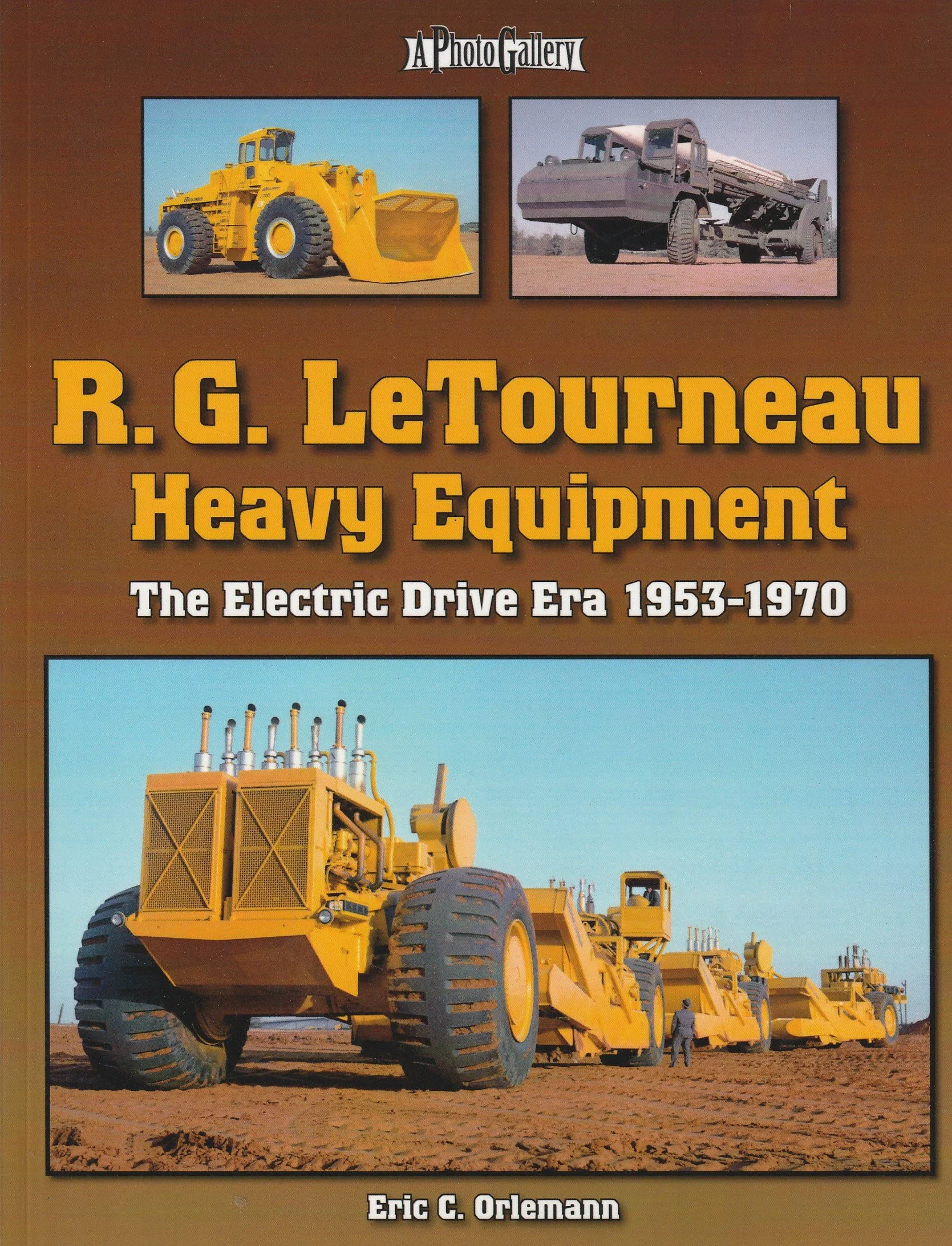
R.G. LeTourneau Heavy Equipment Photo Gallery: The Electric-Drive Era (1953-1970)
ITEM E410
By Eric C. Orlemann
In the history of heavy equipment development, no single man's name is more respected or revered as that of R. G. LeTourneau. Robert Gilmour LeTourneau is considered by many to be the dean of high-speed mobile earthmoving equipment. His designs of the 1920s, 30s, and 40s laid the fundamental groundwork for many of the earthmoving machines we see today. Self-propelled, rubber-tired scrapers, bulldozing blades, and rippers were all conceived under his engineering genius in the quest for moving material at the lowest-cost-per-yard.
The time period of 1953 to 1970 saw many more innovative machine and engineering achievements in the fields of earth-moving, off-shore oil exploration, logging, and defense. This second volume of fantastic machine creations covers the later years before the sale of the company to Marathon in 1971. Standard production, specials, and experimental machines are shown in rare archival images, some being shown in print for the very first time, help showcase what made R. G. LeTourneau so important in the heavy equipment industry.
Softbound, 8.5”x11”, 160 pages, 320 photos
Perhaps I need to offer a disclaimer. I am partial to LeTourneau products, in large part because as a 12-year-old in 1953, I got a Ny-Lint Tournahopper for Christmas. It is a treasure I still have. Over the years, my appreciation for the actual engineering achievements of R.G. LeTourneau that began in the 1920s has only grown. I am also partial to this comprehensive survey, originally published in 2009, that uses 278 black-and-white and 30 color photographs—in their own section—to tell the story of the extraordinary array of innovative R.G. LeTourneau Electric Drive Era equipment. The book features an appreciative “Introduction: R.G. LeTourneau—The Dean of Earthmoving” that pays tribute to his engineering legacy. The book’s six chapters are based on specific types of equipment: Chapter 1: The Early Electric-Drive Years; Chapter 2: The Track-less Land-Trains; Chapter 3: The Timber, Logging, and Forestry Equipment; Chapter 4: The Electric-Diggers; Chapter 5: The Earthmoving Equipment Lines; and Chapter 6: The Material Handling and Specialized Designs. The chapters all follow a consistent format, offering a brief, usually two-page introduction followed by a marvelous array of photographs accompanied by very informative in-depth captions, many in excess of 100 words in length.
Book Review by Robert Gabrick


