
Wagoneer, Gladiator, Comanche, and Scrambler
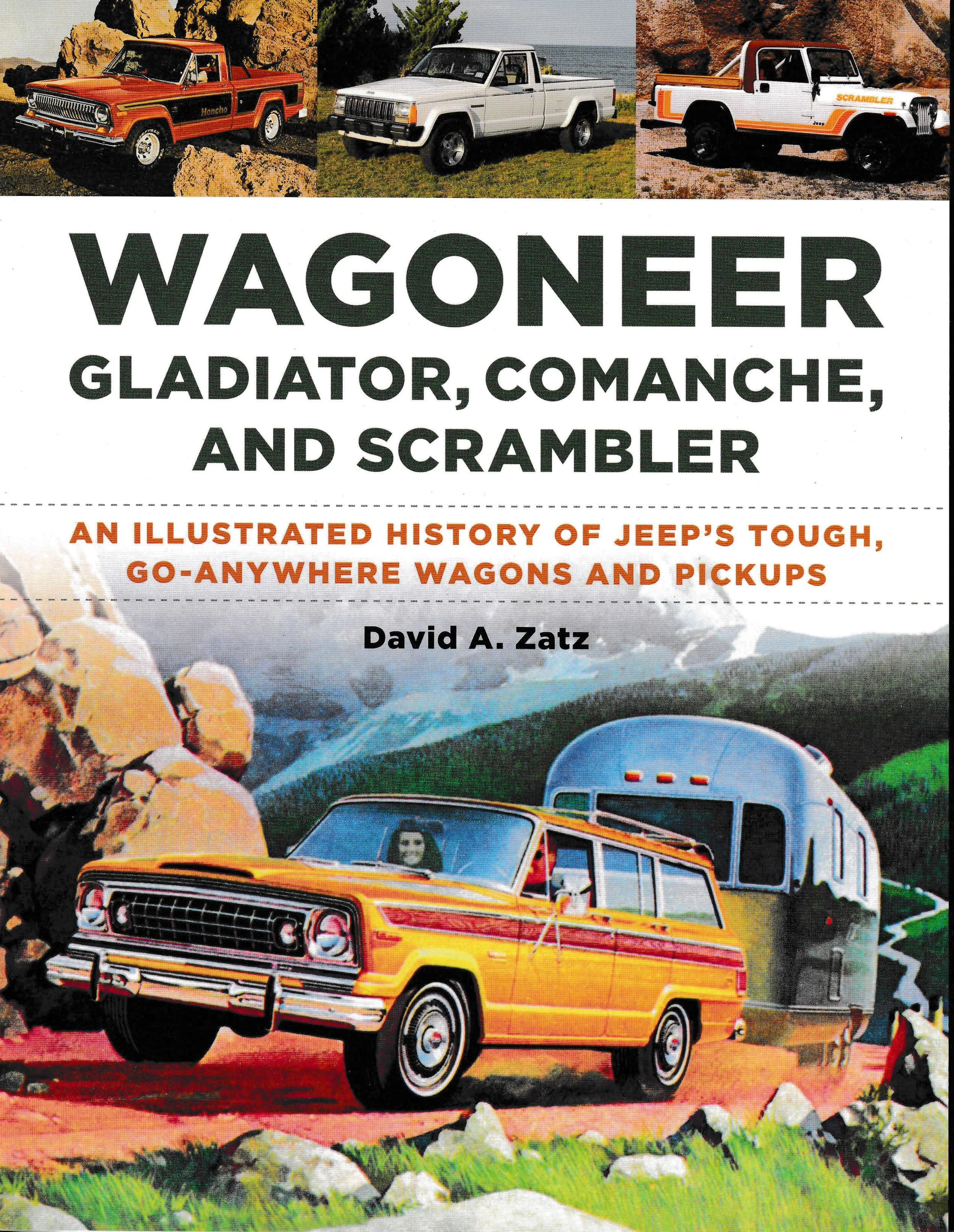
Wagoneer, Gladiator, Comanche, and Scrambler
ITEM E518
An Illustrated History of Jeep's Tough, Go-Anywhere Wagons and Pickups
As Jeep sales have skyrocketed in recent years, the company has put more money and muscle behind vintage names like Wagoneer and Gladiator, and has jumped into pickups as never before. But what made their past vehicles good enough to bring their names back now?
The Wagoneer and its companion, the Gladiator pickup, were well ahead of their time in technology, the first 4x4s with an independent front suspension and automatic transmission. Updates through the years kept them at the forefront of 4x4 technology, but their tough, go-anywhere nature never changed over a long, long product run. The Wagoneer name was also attached to the revolutionary “XJ” series; more commonly associated with the original Cherokee, these tough wagons were an efficient, lightweight unibody design, but were just as capable off-road as the senior Wagoneers.
Wagoneer, Gladiator, Comanche, and Scrambler dives into what made the “XJ” and “ZJ” Wagoneers special—and how they differed from the Cherokee and Grand Cherokee. With the new Gladiator making a splash, it’s time to look back on Jeep’s pickups, not just the original Gladiator, but also one of the most innovative trucks ever made: the Comanche. It shared a great deal with the Cherokee, but clever design gave it both superior ground clearance and the lowest bed height of any comparable 4x4 pickup. The book also covers the CJ-8 Scrambler, which is possibly more popular off-road today than it was at dealerships when it was made. This book traces the history and present state of some of Jeep’s newest vehicles, including the upcoming Wagoneer and the new Gladiator, and some of its most famous and most-loved, with original and period photography; it’s a “must-have” for any Jeep enthusiast.
Softbound, 128 pages, 8.5x11 inches
Published in 2020, David Zatz’s book chronicles the story of Jeep wagons and pickups starting with a look at the four-wheel-drive Nash Quad developed in the early 1900s. Why the Quad? The Jeep is a 4X4, and Nash and Hudson formed American Motors Corp., which acquired Jeep. The book then surveys the creation of the Jeep for World War II, the post-war civilian Willys wagons and pickups through 1962, the 1962–88 Wagoneer and Gladiator, the 1981–85 Jeep Scrambler, and the 1986–92 Comanche, concluding with some pickup concepts and the Gladiator—Jeep’s current pickup introduced in 2019. Heavily illustrated, the book’s 150-plus mostly color illustrations include a generous dose of period sales literature and advertisements that reflect the marketing for each of the pickups and wagons covered. Photographs feature various models and full interior views, as well as closeups of various trim details such as door-mounted controls and gauge clusters. In addition to the informative narrative, eight “sidebars” are devoted to detailed coverage of the engines used to power Jeeps, including the Kaiser-Jeep Overhead-Cam Six, the early AMC 6-cylinder engines, Chrysler-Jeep V-8s, and the 4.0-liter Power-Tech Six. Another sidebar covers land speed records and racing Comanches.
Book Review by Robert Gabrick


