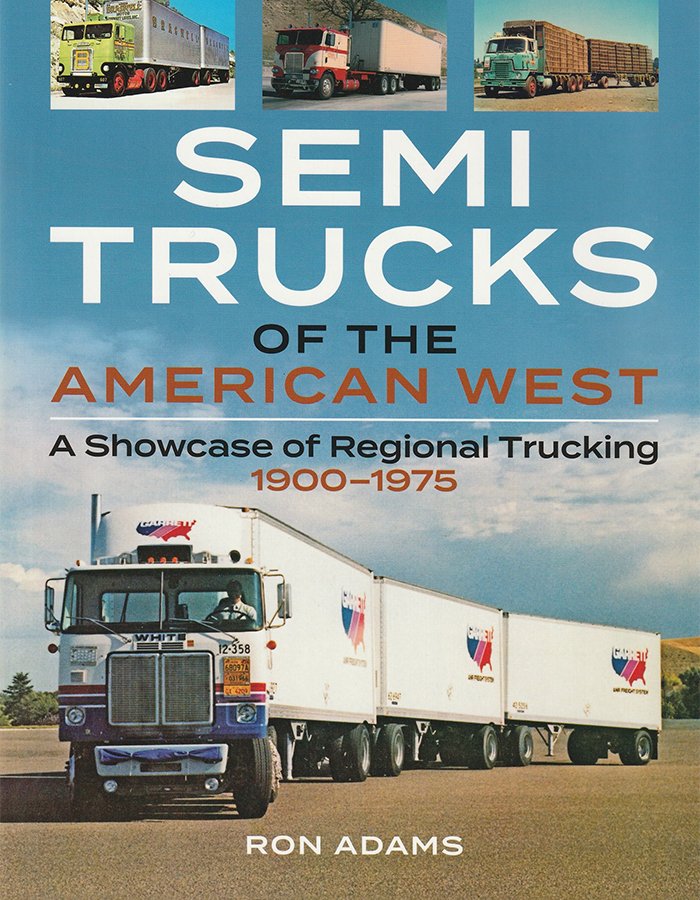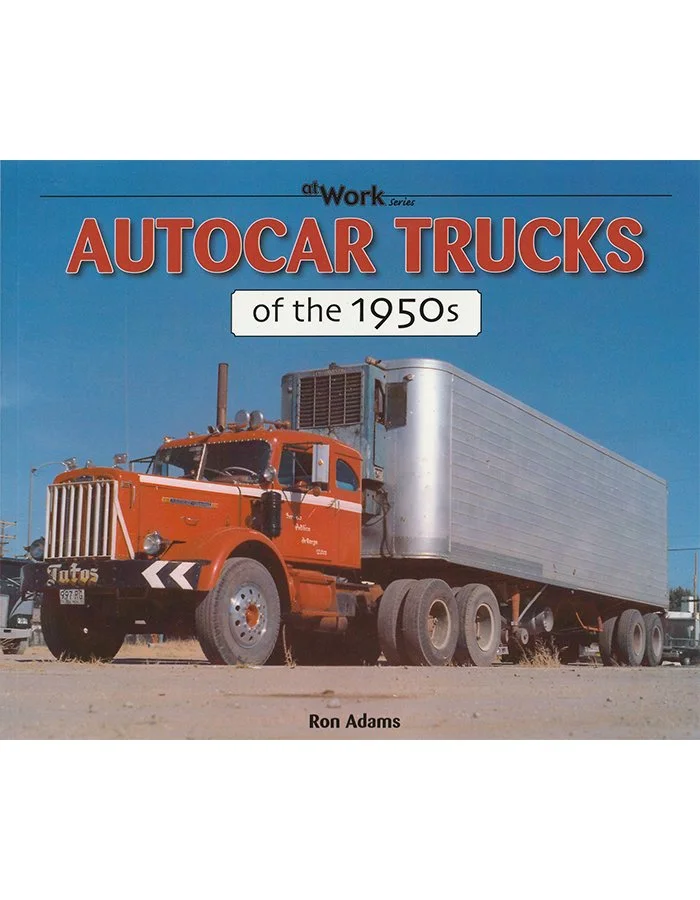
Semi Trucks of the 1950s Photo Gallery

Semi Trucks of the 1950s Photo Gallery
ITEM E384
By Ron Adams
After WWII Americans were anxious to re-stoke the economy after a long “make-do with what you have” dry spell. By the 1950s new highways were being built, new trucking companies were being formed and old ones revived. Americans were buying newly-styled cars and the latest technologies once again. Semi-trucks helped pave the way for this huge growth spurt in America with dependable trucks built by Mack, GMC, Chevrolet, Ford, Dodge, International, White Freightliner, Peterbilt, Kenworth, Diamond T, Reo, Autocar, Brockway, Sterling, and others, many using the increasingly popular diesel engines made by Buda, Hercules, Waukesha, and Cummins, which helped their heavy loads haul quicker. Ron Adams portrays this booming era with over 300 superb photos of trucks hauling cement, fuel, and a variety of goods to enthusiastic Americans.
Softbound, 8.5”x11”, 160 pages, 325 photos
As young boys in the 1950s, my brother and I spent many wonderful hours sitting on East Franklin Avenue in Minneapolis watching the trucks go by and, of course, trying to coax drivers into sounding their air horns. Using a collection of 323 black-and-white photographs, Ron Adams offers a look back at that world. With only a few more-than-acceptable exceptions, as the book’s title suggests, the photographs feature semi-trucks representing the numerous makes hauling freight during the decade. The two-page introduction provides brief reflections—covered in alphabetical order—about some of the truck brands pictured. Providing a richness of what was once available and a reminder of what has been lost since the 1950s, the photographs include a great variety of GMC, Mack, Freightliner, White Freightliner, Autocar, White, Ford, Corbitt, Brown, International, Sterling-White, Sterling, Chevrolet, Reo, Peterbilt, Brockway, Kenworth, Diamond T, Hendrickson, and Fageol Twin Coach trucks. In general, each page of the vertical-format paperback features two photographs, with some pages including three. Captions generally provide information based on what is shown in the photographs. While not expansive, the captions often offer additional details about the specific truck models, the trailer manufacturer, and the companies that used the trucks.
Book Review by Robert Gabrick